
Roofing Services in Albuquerque, New Mexico
Roofing That Protects Everything Beneath It
Every other system in a home depends on the roof performing correctly. Insulation, framing, drywall, electrical, and finish work all exist inside an envelope the roof defines and defends. When the roof fails, nothing inside it is protected. Water does not announce its entry point. It travels along rafters, soaks insulation, pools above ceiling drywall, and appears indoors at a location that has nothing to do with where the breach actually occurred. By the time a stain appears on a ceiling, the damage above it has usually been accumulating for months. Dream Home Innovations has spent 25 years replacing and repairing roofing systems where the interior damage told the story of a roof that was past its service life or never installed correctly.
We serve Albuquerque, New Mexico, as well as the surrounding areas, including Rio Rancho, Edgewood, Placitas, and Corrales. Roofing across Bernalillo County and the East Mountains communities operates under conditions that test materials and installations in ways moderate climates do not. Monsoon season brings intense short-duration rainfall events that expose every flashing failure and penetration seal that was not installed correctly. Winter adds freeze-thaw cycling that forces water into every crack and joint that the summer season opened.
Our roofing scope covers pitched and flat roofing system replacement and repair, underlayment installation, flashing at all penetrations and wall junctions, ridge cap installation, and decking assessment and replacement where required. We assess the existing roof and decking condition before any new material is specified. What goes beneath the surface determines how long what sits above it will last.
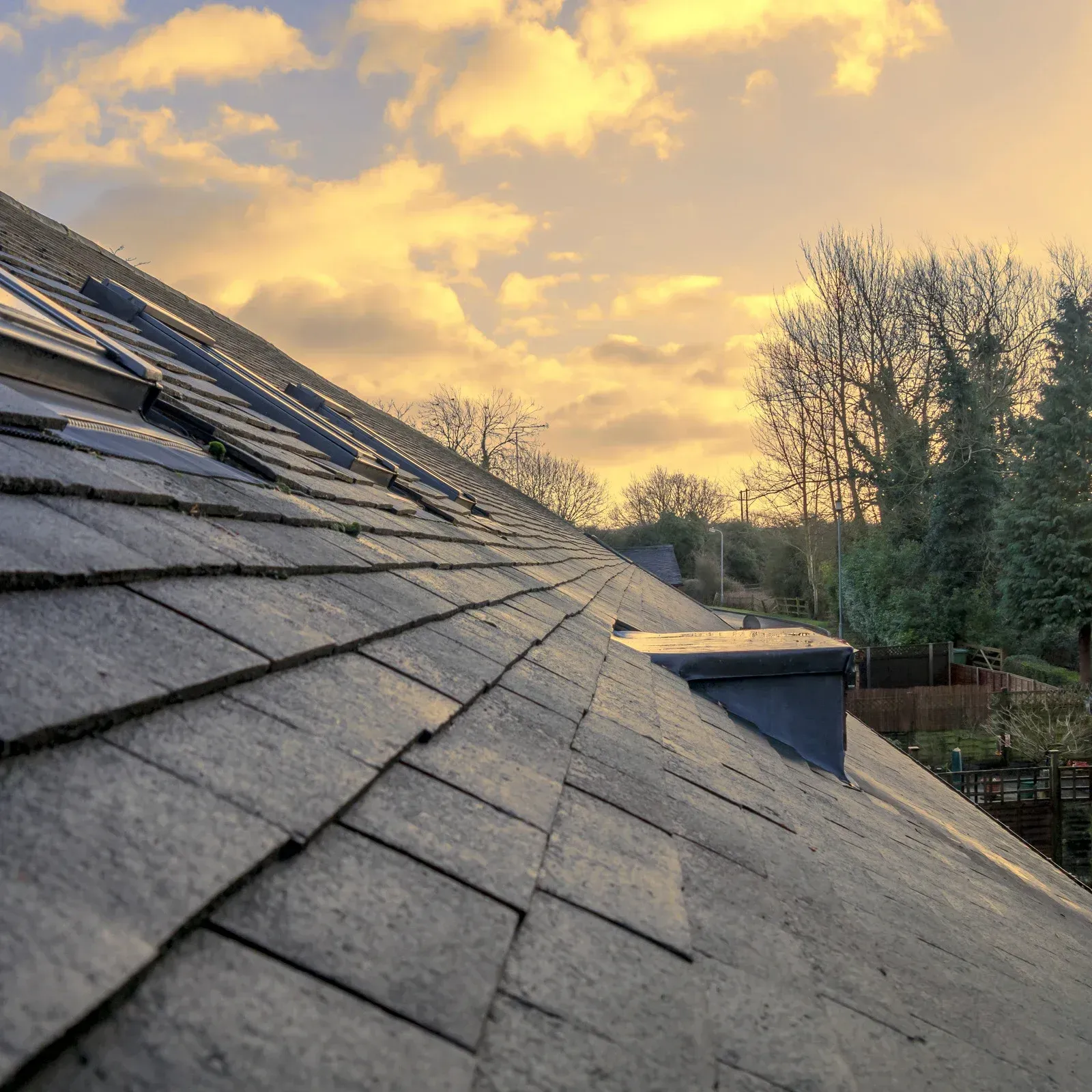
Every Roofing System We Install and Every Phase We Cover
Pitched Roof Replacement
We replace pitched roofing systems including removal of existing materials down to the decking, assessment and replacement of damaged sheathing sections, installation of appropriate underlayment for the pitch and climate, shingle or tile application following manufacturer specifications, and ridge cap installation at the peak and hip lines of the roof.
Flat and Low-Slope Roof Replacement
We replace flat and low-slope roofing systems using modified bitumen, TPO membrane, and built-up roofing materials appropriate to the drainage design and the thermal exposure of the specific roof surface. Installation includes perimeter edge metal, penetration flashings, drain sumps at collection points, and seam sealing at all membrane overlaps.
Roofing Repair
We repair localized roofing damage from storm impact, wind uplift, fallen debris, and aging material failure. Repair scope is determined by an assessment of the affected area and the condition of the surrounding material. We replace damaged sections, reseal failed flashings, and address any decking exposure before the repaired area is closed with new surface material.
Flashing Installation and Replacement
We install and replace step flashing, counter flashing, valley flashing, and penetration flashings at chimneys, skylights, vents, and wall-to-roof junctions. Flashing replacement includes removing existing failed material, preparing the substrate, installing new metal or membrane flashing in the correct configuration, and sealing exposed edges and laps to prevent water infiltration.
Roof Decking Assessment and Replacement
We inspect roof decking during roofing replacement projects and replace sections that have sustained rot, delamination, impact damage, or moisture saturation that has compromised their fastener-holding capacity. Decking replacement is performed before underlayment installation so the new roofing system rests on a structurally sound and dry substrate throughout the full roof area.
Roof-to-Gutter System Coordination
We coordinate roofing replacement with gutter system assessment and replacement where the existing gutters are incompatible with the new roofing edge detail or have failed to the point where they would compromise the new roof installation. Proper termination of the roofing system at the eave edge and correct integration with the gutter fascia bracket system are addressed as part of the roofing scope.
What Gets Compromised When a Roof Is Installed Without Proper Process
Complete Decking Assessment Before New Material Is Installed
Installing new roofing over compromised decking produces a system that fails from beneath before the surface material reaches its rated service life. Assessing sheathing for rot, delamination, and moisture damage before laying underlayment identifies the sections that require replacement before the new roof assembly is closed over them permanently.
Proper Underlayment That Provides Secondary Water Protection
Roofing underlayment is the last line of defense when surface material is compromised by wind, impact, or aging. Installing the correct underlayment type at the correct lap and fastener pattern for the roof pitch and the climate ensures that water driven under surface material by wind or ice does not reach the decking beneath.
Flashing Installed at Every Vulnerable Junction
Flashing failures at chimneys, skylights, plumbing penetrations, dormers, and wall-to-roof junctions account for the majority of residential roof leaks that are not caused by surface material failure. Correct flashing installation requires step flashing, counter flashing, and sealant application in the sequence and configuration the junction type demands.
Ridge Cap That Seals the Highest Vulnerability on a Pitched Roof
The ridge of a pitched roof is the point where two slopes meet and where wind-driven rain has the greatest opportunity to penetrate the surface plane. Properly installed ridge cap shingles overlap sufficiently, are fastened at the correct nail pattern, and are sealed at their exposed edges to prevent water entry at the roof's highest line.
Low-Slope System Selection That Handles Standing Water
Flat and low-slope roofs common across Albuquerque's residential stock cannot use the same materials as steep-slope applications. Modified bitumen, TPO, and built-up roofing systems are designed to handle the ponding water that low-slope drainage allows and to accommodate the thermal expansion and contraction that dark membrane surfaces experience under New Mexico's sun.
Coordinated Drainage That Extends Roofing System Life
A roofing system performs only as well as the drainage infrastructure that removes water from it. Gutters, downspouts, and scuppers sized and positioned correctly for the roof area and local rainfall intensity prevent water from backing up under the roof edge, ponding at low spots, and accelerating deterioration at the perimeter of the roofing system.
Roofing That Works When Weather Hits
A roof that was installed correctly does not need attention for years. It sheds monsoon rainfall, survives wind events, handles the freeze-thaw cycling that elevation delivers, and does all of this without requiring the homeowner to think about it. That outcome is not accidental. It is the result of correct decking assessment, proper underlayment specification, flashing installed at every junction that matters, and surface material fastened and sealed to the standards the climate demands. Dream Home Innovations has delivered that outcome on roofing projects across Albuquerque, Rio Rancho, Edgewood, and throughout Bernalillo County for 25 years. Every roof we install across Albuquerque, New Mexico reflects the same standard, because a roof that performs quietly for decades is the only version worth putting on a home.
FAQs - Frequently Asked Questions
How do I know when my roof needs replacement rather than repair?
Roofs with widespread granule loss, multiple layers of existing shingles, decking that is soft or delaminated in several locations, and a system that is approaching or past its rated service life typically require replacement. Localized damage from impact or storm events on a roof still within its service life is usually repairable.
What roofing materials perform best in Albuquerque's climate?
Architectural shingles with high wind ratings and Class 4 impact resistance perform well on pitched roofs in the Albuquerque region. Modified bitumen and TPO membranes are appropriate for flat and low-slope applications. Material selection should account for UV intensity at Albuquerque's elevation and the monsoon rainfall patterns the roof must manage.
Does Dream Home Innovations handle both flat and pitched roofing systems in Albuquerque, New Mexico?
Dream Home Innovations installs and repairs both flat and pitched roofing systems throughout Albuquerque, New Mexico and the surrounding communities of Rio Rancho, Edgewood, Placitas, and Corrales. Our roofing scope covers material removal, decking assessment, underlayment, surface material installation, flashing, and coordination with existing or replacement gutter systems.
What causes roofing to fail before its rated service life?
Premature roofing failure typically results from inadequate underlayment, incorrect fastener pattern, flashing omissions at vulnerable junctions, installation over damaged decking, or product selection that does not account for the climate's UV intensity, wind exposure, or thermal cycling demands. Correct installation to manufacturer specifications prevents the majority of premature failure causes.
How long does a roofing replacement project take?
A standard single-family residential roof replacement typically runs two to four days for pitched systems under normal weather conditions. Flat roof replacements and projects requiring significant decking replacement or complex flashing work at multiple penetrations may extend beyond that depending on the roof area and the scope of preparation work identified during tear-off.
Why is roofing underlayment important if shingles are already being installed?
Underlayment serves as a secondary water barrier when shingles are displaced by wind, damaged by impact, or allow wind-driven rain to penetrate at laps and edges. Without underlayment, any breach in the surface material provides direct water access to the decking and framing. The underlayment type and installation method vary by roof pitch and climate exposure.
What permits are required for roofing replacement in Albuquerque?
Roofing replacement in Albuquerque typically requires a building permit through the City of Albuquerque Development Services Department. Permit requirements include inspection of the completed installation before the job is considered closed. We manage permit applications and coordinate inspections as part of the roofing replacement scope we provide to homeowners.
How do you address decking damage discovered during a roofing replacement?
When tear-off reveals damaged, rotted, or delaminated decking sections, we stop the installation, document the affected areas, remove compromised panels, and install replacement sheathing before proceeding with underlayment. Homeowners are informed of the additional scope and material required before replacement decking is installed and the new roofing system continues over it.