
Plumbing Services in Albuquerque, New Mexico
Plumbing Work Built Behind the Walls to Last
Plumbing does not fail all at once. It deteriorates across years of use, mineral buildup, temperature cycling, and the slow degradation of materials installed in a different era of residential construction. A supply line narrowing with scale deposits for a decade does not announce the day it will fail. A drain running slow for months does not choose a convenient moment to back up entirely. The galvanized pipe still serving a 1960s home in Albuquerque's older neighborhoods is not going to hold indefinitely. Dream Home Innovations has spent 25 years handling residential plumbing for homeowners who understand that waiting for a visible failure is not a maintenance strategy.
Based in Albuquerque, New Mexico, we also serve Rio Rancho, Bernalillo, Los Lunas, and Corrales. Plumbing throughout Bernalillo County and the wider Middle Rio Grande region carries specific challenges tied to the local water supply. Albuquerque's water is notably hard. High mineral content accelerates scale buildup inside supply lines, at fixture connections, and within water heater tanks across the metro area. Older neighborhoods across central Albuquerque and the North Valley still carry original galvanized steel supply lines deteriorating from the inside, with corrosion byproducts affecting water quality long before the pipe physically fails.
Our plumbing scope covers supply line replacement, drain and waste piping, fixture installation and replacement, water heater installation, rough-in plumbing for remodel projects, and repair of active leaks and flow restrictions. Every project is performed with the permit and inspection requirements applicable in Albuquerque and surrounding jurisdictions. The work is documented and code-compliant before walls are closed over the finished installation.
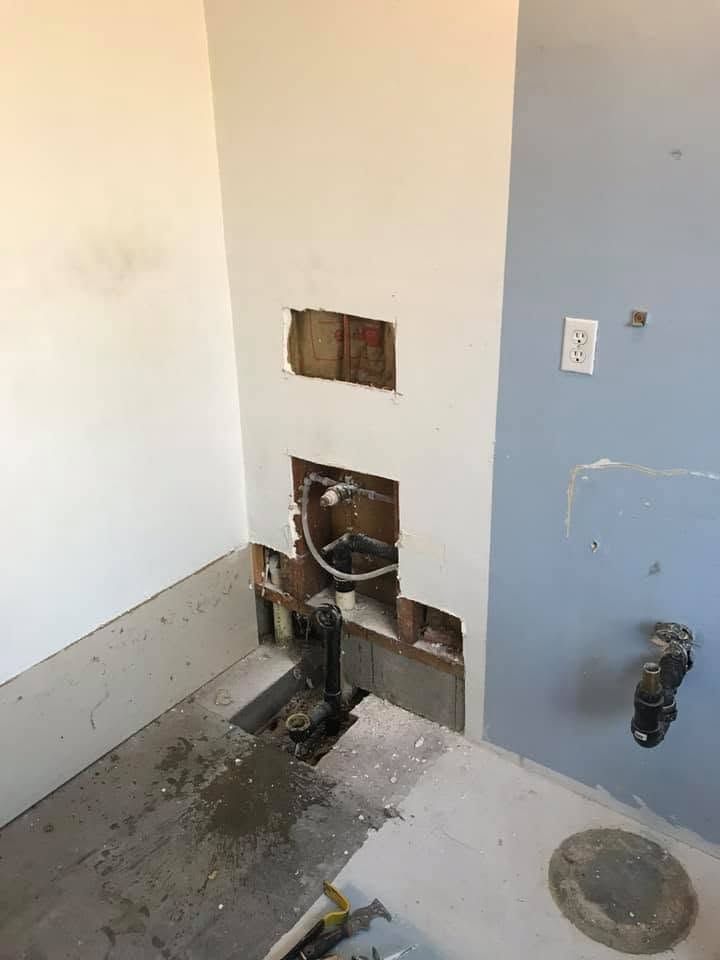
The Full Scope of Our Residential Plumbing Work
Supply Line Replacement
We replace galvanized, polybutylene, and deteriorated copper supply lines with PEX or copper piping suited to the installation and code requirements. Work includes shutoff valve installation at fixture branches, pressure testing before walls close, and verifying flow at all served fixtures and appliances.
Drain and Waste Piping
We install and replace drain, waste, and vent piping in homes, including kitchen and bathroom rough-in for remodels. Work covers deteriorated cast iron or ABS replacement and correction of poorly sloped drain runs that restrict flow. All drain work is permitted and inspected.
Fixture Installation and Replacement
We install sinks, toilets, faucets, showers, bathtubs, dishwashers, and garbage disposals as standalone replacements or part of remodel projects. Fixture installation includes supply connection, drain connection, sealing at the base or deck mount, and operation checks before the work is considered complete.
Water Heater Installation and Replacement
We install tank and tankless water heaters in gas and electric configurations, sized for household demand. Installation includes temperature and pressure relief valve placement, safe venting for gas units, seismic strapping where required, and removal and disposal of the existing unit during replacement service.
Rough-In Plumbing for Remodel Projects
We perform rough-in plumbing for kitchen, bathroom, and full home remodels, including repositioning supply and drain lines, adding branches for new fixtures, and setting connections at correct locations and elevations. All rough-in work is permitted and inspected before walls are closed over completed plumbing.
Leak Detection and Repair
We locate and repair active leaks at supply connections, drain joints, fixture bases, and inside wall assemblies where plumbing has failed behind finished surfaces. Leak detection includes visual inspection, pressure testing, and moisture assessment to trace the source accurately before repair work begins on the system.
What Separates Plumbing That Holds From Plumbing That Fails at the Joint
Code-Compliant Installation That Passes Inspection
Residential plumbing must meet local codes for pipe materials, support spacing, venting, and fixture connections. Permitted, inspected work protects homeowners during review, future renovations, and property sales by creating a documented record that confirms the installation was completed to required standards before walls are closed.
Supply Line Materials That Match the Application
PEX, copper, and CPVC each perform differently under water chemistry, pressure, and temperature conditions. Choosing the correct supply line material for each run and connection type helps prevent premature failure at fittings, valves, and pipe walls while supporting reliable flow throughout the home’s plumbing system.
Drain and Waste Piping at the Correct Slope
Drain lines need the correct slope to move waste without allowing solids to settle inside the pipe. Lines set too flat restrict flow over time. Lines set too steep let liquids outrun solids, causing buildup and blockages that require avoidable repairs later in the system.
Fixture Installation That Seals and Functions Correctly
Fixtures must be installed with proper supply connections, drain seals, base gaskets, and connection torque. Poor installation can cause slow leaks under cabinets, around toilets, or inside floors. Correct fixture installation prevents water damage and ensures sinks, toilets, tubs, and showers function as intended daily.
Water Heater Installation That Meets Safety Requirements
Water heater installation requires correct sizing, proper temperature and pressure relief valve placement, safe venting for gas units, and seismic strapping where required. These details protect the home from leaks, combustion risks, and pressure-related hazards while ensuring the system serves household demand reliably over time.
Leak Repair That Addresses the Cause, Not Just the Evidence
A visible leak often points to a deeper issue that has developed over time. We trace the source before repairing the connection so related deterioration is not ignored. Correct diagnosis helps prevent repeated leaks at nearby fittings, joints, or materials affected by the same problem.
Reliable Flow Starts With Correct Installation
There is a version of residential plumbing that passes visual inspection and another version that is built to perform correctly for the next twenty-five years. The difference lives in the details: the support spacing that prevents pipe sag, the correct slope on drain lines that prevents accumulation, the shutoff valve at every branch that makes future repairs possible without shutting down the whole system. At Dream Home Innovations, those details have been part of every plumbing project we have completed across Albuquerque, Rio Rancho, Bernalillo, and the wider Bernalillo County region for 25 years. We handle plumbing with permits in place and inspections scheduled because that is how work gets documented correctly. Every plumbing installation we complete throughout Albuquerque, New Mexico is built to that standard, because the pipes we close walls over need to work long after we leave.
FAQs - Frequently Asked Questions
What types of supply line materials do you install in residential plumbing?
We install PEX, copper, and CPVC supply lines based on application, code requirements, and property water conditions. PEX is flexible and resistant to freeze-related damage, making it practical for temperature changes, while copper and CPVC suit other specific residential plumbing situations.
How do you handle plumbing rough-in during a kitchen or bathroom remodel?
Rough-in begins after demolition exposes existing supply and drain connections. We assess the new fixture layout, reposition supply and drain lines to the correct locations and elevations, permit the work, and schedule inspection before drywall or finished surfaces are installed over the plumbing.
What does Dream Home Innovations include in a plumbing installation project in Albuquerque, New Mexico?
Dream Home Innovations includes permit applications, material installation, pressure testing, inspection coordination, and fixture operation checks for plumbing projects throughout Albuquerque, New Mexico and nearby communities including Rio Rancho, Bernalillo, Corrales, and Los Lunas across Bernalillo County and the wider metro region.
Why does Albuquerque's hard water affect residential plumbing systems?
Albuquerque's hard water contains minerals that build up inside supply lines, fixture connections, and water heater tanks. Over time, this scale restricts flow, strains water heaters, reduces fixture performance, and shortens the service life of appliances connected to the home’s plumbing system.
When should galvanized steel supply lines be replaced?
Galvanized supply lines should be replaced when water flow drops, discoloration appears at faucets, or the lines approach fifty years of service. Many older Albuquerque homes already exceed that age, meaning corrosion and buildup may be restricting flow and affecting water quality throughout the home.
What permits are required for residential plumbing work in Albuquerque?
Most plumbing work beyond minor fixture replacement requires a permit through Albuquerque Development Services or the applicable county office outside city limits. Permitted work is inspected before walls close, creating a documented record that protects homeowners during future renovations, inspections, and property transactions.
How do you locate a leak inside a wall without opening the entire wall?
We use pressure testing, moisture meter readings, visible staining, and damage patterns to narrow the leak location before opening the wall. This limits unnecessary demolition while helping ensure the repair reaches the actual failure point instead of only addressing visible surface damage nearby.
What is the correct slope for residential drain lines?
Residential drain lines two inches and smaller usually require one-quarter inch of slope per foot. Three-inch and larger lines typically use one-eighth inch per foot. Correct slope keeps waste moving consistently without allowing solids to settle or liquids to outrun the material carried.