
ADA Compliance Installations in Albuquerque, New Mexico
Accessibility Upgrades That Make Home Work Better
Most homes are built for an idealized version of their occupants: able-bodied, fully mobile, and unchanged by age or injury. Reality moves differently. Mobility changes after surgery, after a stroke, after a fall, or simply across the arc of aging that every household eventually navigates. When those changes arrive, the once comfortable home becomes an obstacle course of narrow doorways, slippery bathroom floors, fixtures set at the wrong height, and thresholds a wheelchair cannot clear. Dream Home Innovations has spent 25 years installing ADA-compliant features for households where accessibility is not a preference but a necessity.
We serve Albuquerque, New Mexico as well as the surrounding areas, including Rio Rancho, Bernalillo, Corrales, and Los Lunas. Homes throughout Bernalillo County vary considerably in their baseline accessibility. Older construction in central Albuquerque and the North Valley features narrow doorways, tub-only bathrooms, and high thresholds that predate any consideration of accessible design. Adobe construction common throughout the region presents its own structural considerations when doorway widening or ramp installation is part of the required scope.
Our ADA compliance scope covers grab bar installation, curbless shower conversions, doorway widening, ramp construction, lever-style hardware replacement, accessible vanity configurations, and comfort-height fixture installation. We assess each space against the resident's specific mobility requirements before specifying any modification. Accessibility is not a uniform solution. Every household's needs define the correct scope for the work we perform.
The Accessibility Modifications and Installations Our Team Delivers
Grab Bar Installation
We install grab bars in showers, beside tubs, near toilets, and along hallways at ADA-recommended heights and positions. Work includes locating existing blocking or adding rated backing before mounting hardware so each bar supports the intended load safely during daily use and movement.
Curbless Shower Conversion
We convert standard showers and tubs into curbless entries with proper floor slope, linear or center drain placement, and waterproofing. The installation includes wet-area tile selection and threshold removal so wheelchair and walker users can enter the shower without a curb creating an obstruction.
Doorway Widening
We widen interior doorways to provide the clear opening width needed for wheelchairs and mobility aids. Work may include header changes, framing adjustment, new door installation, casing, and threshold finishing so the opening functions properly and looks like an intentional part of the home.
Ramp Construction
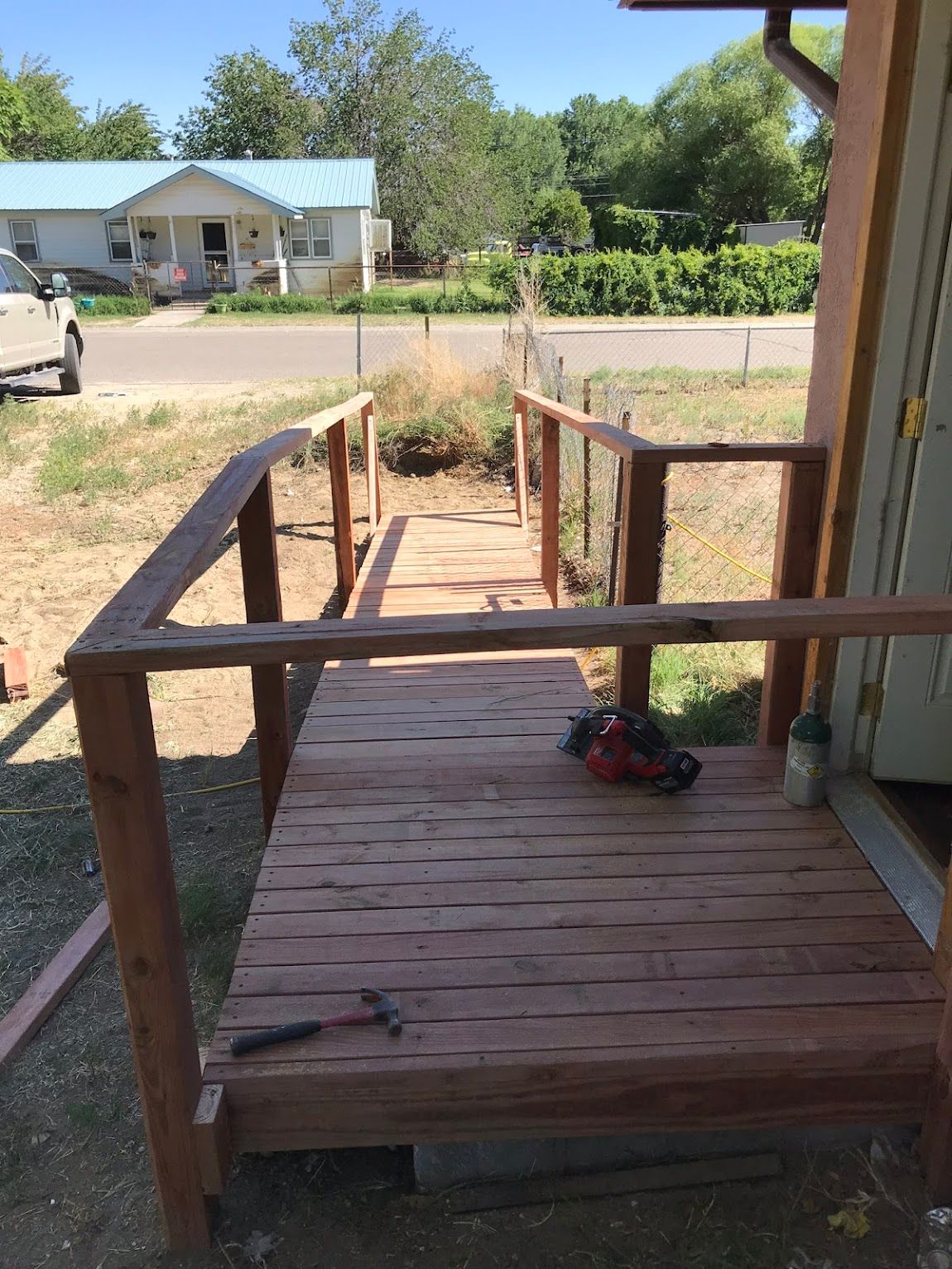
We design and build exterior entry ramps using ADA-informed slope ratios, proper handrail placement, and outdoor surface materials suited to New Mexico conditions. Ramp construction is planned around the entry height, available run, turning space, and traction needs of the resident using it.
Lever-Style Hardware Installation
We replace round door knobs with lever-style handles that operate without tight gripping, pinching, or wrist twisting. Hardware is selected for each door’s thickness, backset, and existing preparation, covering interior and exterior doors, including deadbolt coordination where needed for smooth daily operation.
Accessible Vanity and Fixture Configuration
We install comfort-height toilets, accessible vanity layouts, knee clearance configurations, offset drain assemblies, and hand-held showerheads positioned for seated use. Each fixture setup is planned around the resident’s mobility needs so the bathroom becomes easier, safer, and more practical to use every day.
What ADA Compliance Modifications Deliver Beyond the Modification Itself
Independence Preserved in the Home Environment
Accessibility modifications help residents with mobility limitations complete daily tasks with less assistance. Grab bars, curbless entries, wider access points, and properly positioned fixtures support safer movement through bathrooms, bedrooms, kitchens, and main living areas, allowing the home to remain functional for everyday use.
Fall Risk Reduced at the Highest-Risk Locations
Bathrooms are one of the highest-risk areas for falls, especially during transitions into showers, out of tubs, or up from toilets. Grab bars, curbless shower entries, slip-resistant flooring, and properly placed fixtures reduce these risks with support points designed for real household use.
Aging in Place Without Forced Relocation
Accessibility upgrades allow homeowners to remain in familiar spaces as mobility changes over time. Instead of relocating because a home no longer works physically, residents can modify bathrooms, entries, doorways, and fixtures to preserve routine, comfort, independence, and connection to their established community.
Property Value Preserved for Future Buyers
Accessibility features can add long-term functional value for buyers at different life stages. Properly installed grab bars, widened doorways, curbless showers, ramps, and accessible fixtures make the home more usable without limiting appeal, especially for households planning for aging relatives or future mobility needs.
Structural Installation That Holds Under Real Load
Grab bars and support hardware must be mounted into framing or rated backing, not just surface material. Without proper structural support, hardware can pull loose when needed most. Correct installation ensures the feature can handle applied force and provide dependable support during daily movement.
Compliance With Guidelines That Protect Household Members
ADA guidelines define practical standards for clearances, ramp slopes, fixture heights, and grab bar placement. Following these measurements helps ensure accessibility features function correctly for residents with mobility limitations. Proper compliance turns modifications into safe, usable improvements rather than decorative additions that fail under real conditions.
Safer Spaces for More Independent Living
Accessibility is not about making a home look different. It is about making it function for the person who lives inside it, at every stage of their mobility, without requiring them to navigate around the limitations that standard construction built in without consideration. At Dream Home Innovations, we have spent 25 years installing accessibility modifications across homes in Albuquerque, Rio Rancho, Corrales, and throughout the Bernalillo County region for households where these changes made the difference between staying in a familiar home and leaving it. We assess every space against the resident's actual requirements, install every modification to the structural and dimensional standards that make them functional rather than decorative, and finish every project to the same standard we apply across every other service we provide throughout Albuquerque, New Mexico.
FAQs - Frequently Asked Questions
What is the correct height for grab bar installation beside a toilet?
Grab bars beside a toilet are usually installed with the centerline 33 to 36 inches above the finished floor. Placement supports sitting, standing, and transfer movement. The exact height within that range should reflect the resident's height, reach, balance, and specific mobility needs during use.
Does Dream Home Innovations assess the home before specifying ADA modifications in Albuquerque, New Mexico?
Dream Home Innovations assesses each home before recommending ADA modifications in Albuquerque, New Mexico. We review the resident's mobility needs, room layout, entry points, bathroom access, and daily movement patterns. The goal is to choose modifications that create function, not unnecessary construction or generic upgrades.
What structural backing is required for grab bar installation?
Grab bars should be anchored into framing or blocking rated to support at least 250 pounds of applied load. When existing walls lack backing, we install structural blocking before closure or use rated anchors when opening the wall is not included in the project scope.
What slope is required for a residential wheelchair ramp?
ADA guidelines generally call for a maximum ramp slope of one inch of rise for every twelve inches of horizontal run. Steeper ramps increase effort and risk during use. Handrails are typically required on both sides when the ramp rise exceeds six inches.
Can a standard bathtub bathroom be converted to an accessible shower?
Yes, a tub-only bathroom can be converted into a curbless accessible shower. The process includes removing the tub, repositioning the drain, creating proper floor slope, installing waterproofing, selecting wet-rated flooring, and eliminating the curb so wheelchair or walker access is safer and easier.
What doorway width is required for wheelchair accessibility?
A clear doorway opening of at least 32 inches is the basic wheelchair passage standard, while 36 inches is preferred for easier movement. Clear width is measured between the door stop on the strike side and the open door face on the hinge side.
Are lever door handles required throughout the home for ADA compliance?
ADA guidelines call for hardware that works without tight grasping, pinching, or wrist twisting. Lever, loop, or push-style hardware is preferred over round knobs. Replacing knobs with levers improves usability for residents with limited grip strength, hand pain, or reduced mobility.
What is a comfort-height toilet and who benefits from its installation?
A comfort-height toilet usually has a seat height between 17 and 19 inches, compared to about 15 inches on standard toilets. The added height helps people with limited hip, knee, or lower body strength stand and sit with less strain and effort.